Hi, I am Alexander
but you may know me as Krakenstein Designer.
As a Vienna-based Visual Designer and Developer, I specialize in building brands and elevating online presence. My expertise spans corporate design, brand identity, UX design, graphic design, web design, and print design. I combine creativity, deep technical knowledge, and strategic planning to ensure every project stands out from the competition and truly connects with users.
From user experience (UX) design and web development to SEO and print design, I handle every aspect of the creative process with passion and professionalism. My focus is on delivering exceptional results for businesses seeking memorable and effective design solutions.
I merge creativity with strategy to deliver impactful corporate design, compelling brand design, and high-quality print design—helping brands communicate their message and make a lasting impression.
Let’s embark on a creative journey together, transforming your ideas into captivating designs that leave a lasting impact.
At this pivotal point in my career, I am dedicated to creating visual designs that make a real difference for companies. My goal is to be recognized as a dedicated, dependable, and purpose-driven visual designer who always sees projects through to success.
What motivates me is my love for creativity and my drive to help brands share messages that stand out and connect with people. Over the years, I’ve developed a keen eye for design trends and an ability to anticipate market needs, allowing me to deliver work that matters.
My core professional values:
- Creativity and innovation
It is important to me to work in an environment that encourages creative ideas and allows for innovation. I am convinced that extraordinary solutions can only be found when you are open to new ideas and have the courage to stray from the beaten path.
- Teamwork and mutual respect
For me, successful projects always arise from collaboration with others. For me, respectful and constructive interaction within the team is the basis for achieving the best together and learning from one another.
- Honesty and transparency
Honesty is a core value for me in my professional life. I value open and transparent communication—both within the team and with clients. This is the only way to build trust and sustainable cooperation.
- Reliability and sense of responsibility
I attach great importance to keeping my promises and taking responsibility for my tasks. The trust of my colleagues and clients is very important to me.
- Quality and professionalism
I aim to always deliver high-quality work – both in creative and organizational areas. For me, professionalism means working in a structured, solution-oriented, and precise manner, even under time pressure.
- Further development and willingness to learn
I appreciate companies that enable personal and professional development. For me, staying up to date with the latest developments, learning about new tools and trends, and continually expanding my knowledge are essential.
Certifications and Professional Development
In addition to my formal qualifications, my portfolio is enriched by extensive hands-on experience in visual design, UX design, and web development. I believe practical application is as important as formal education, and I consistently seek opportunities to apply my skills in real-world projects.
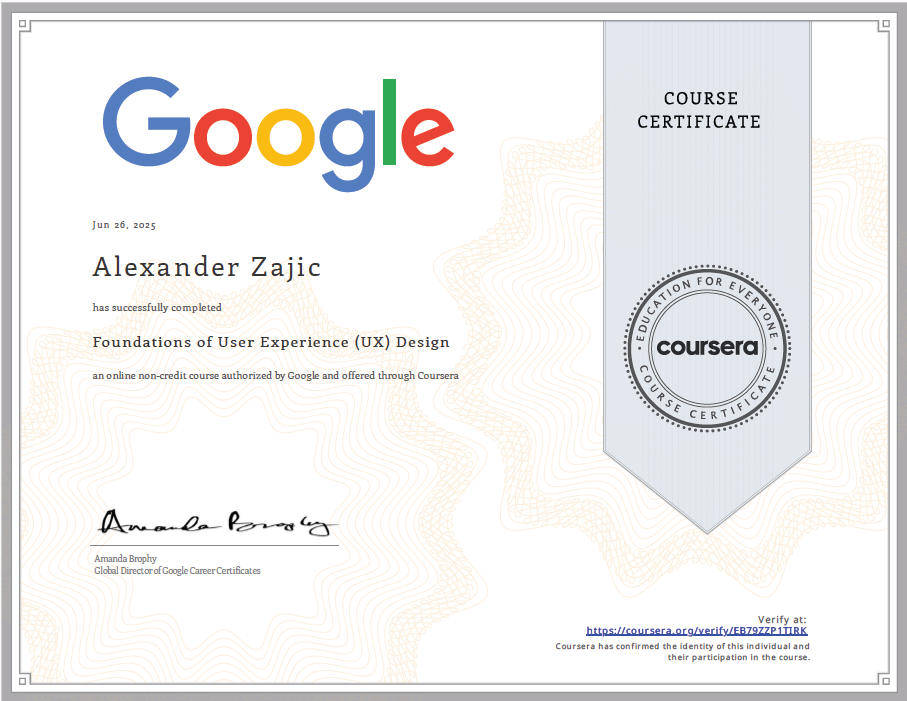
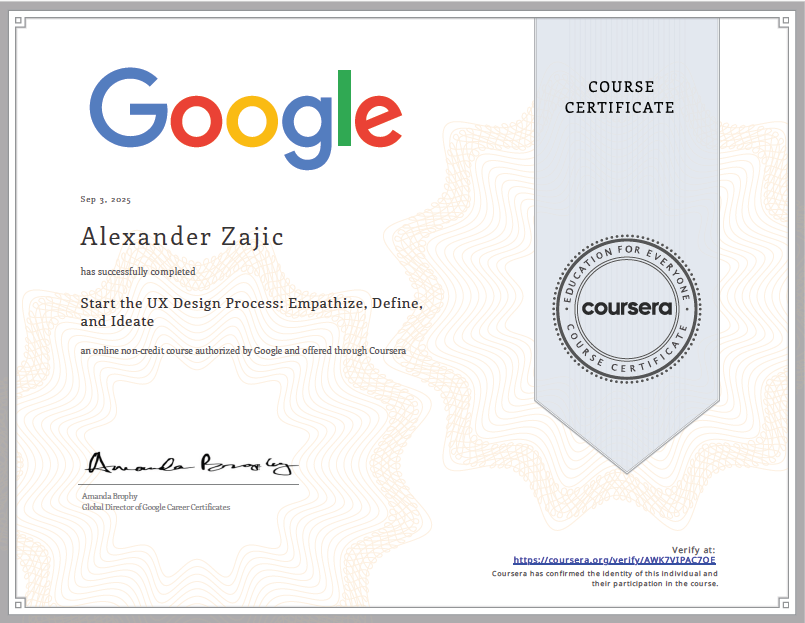
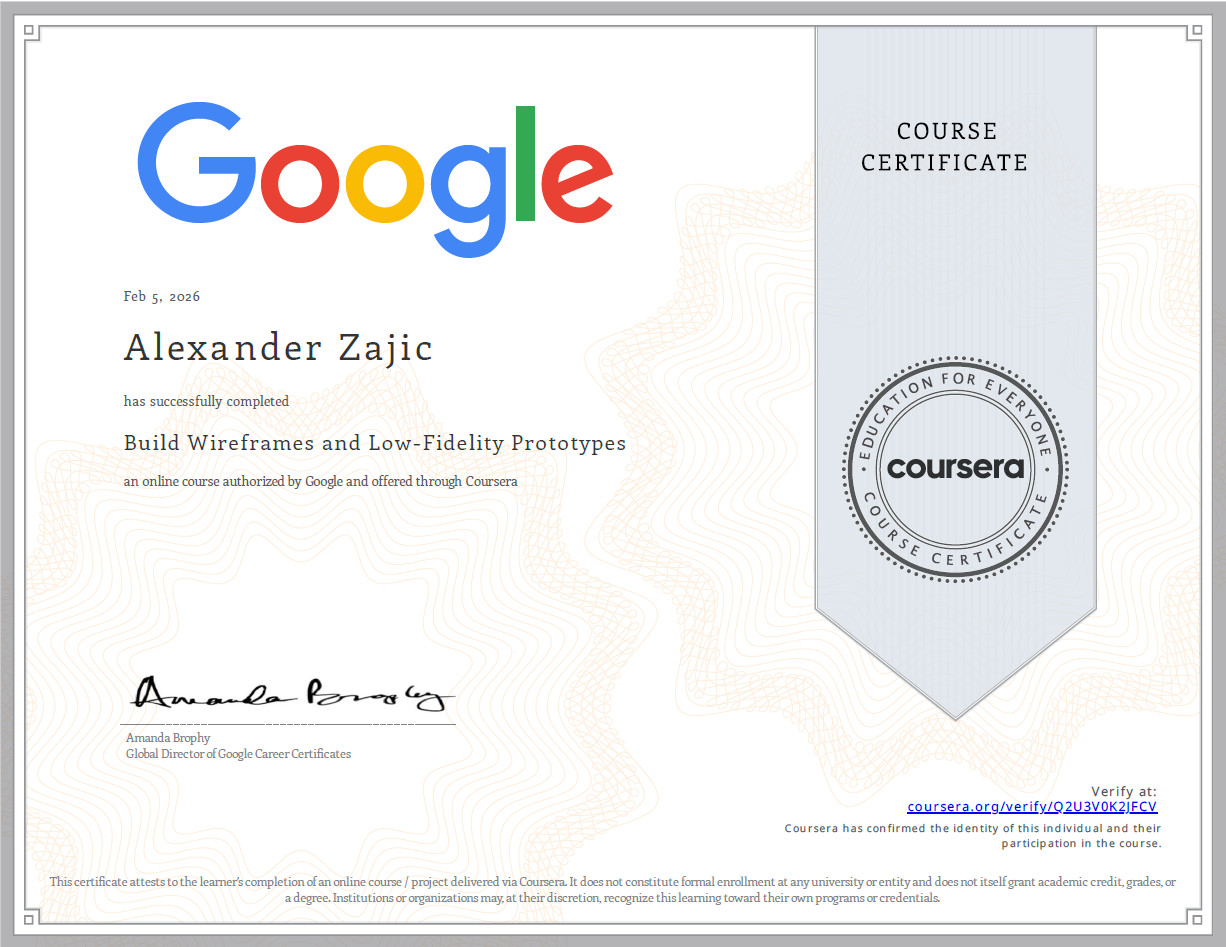
Currently, I am advancing my expertise through the Google UX Professional Certificate program, a comprehensive series designed to build robust user experience skills. I am also pursuing certification as a Certified Professional for User Experience at Vienna’s Technicum Wien Academy. This commitment to continuous learning reflects my dedication to staying at the forefront of the UX and design field.
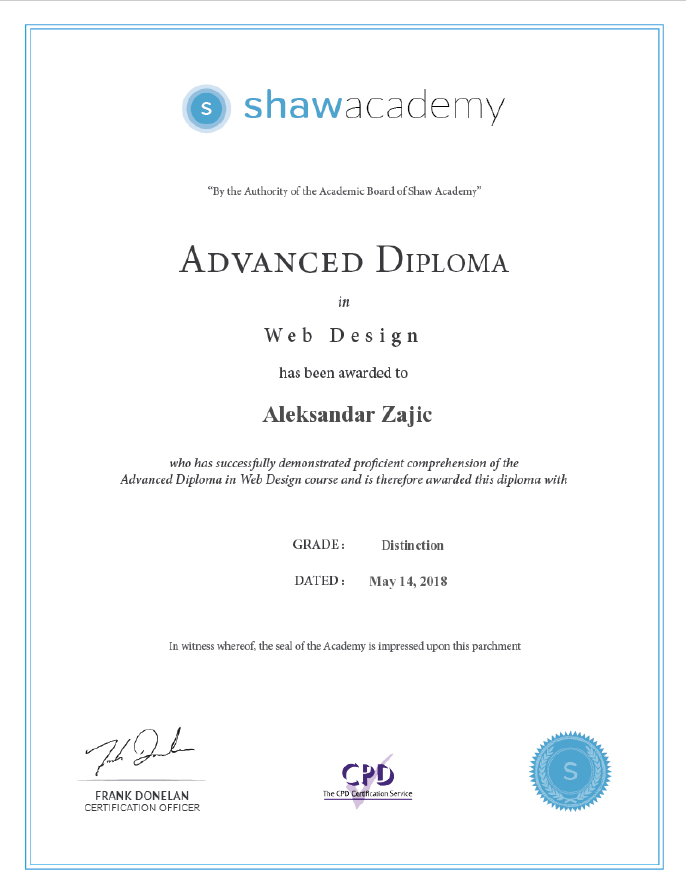
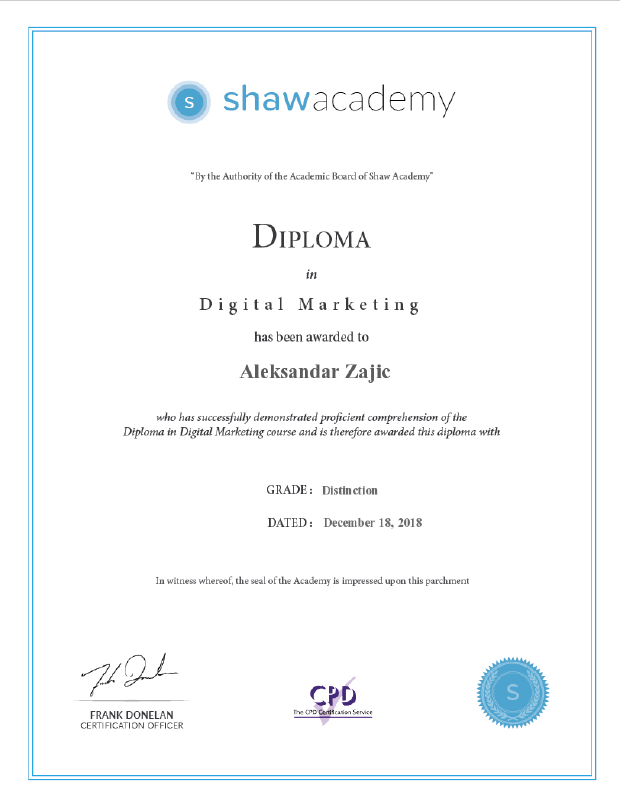
Shaw Academy - Dublin (IR)
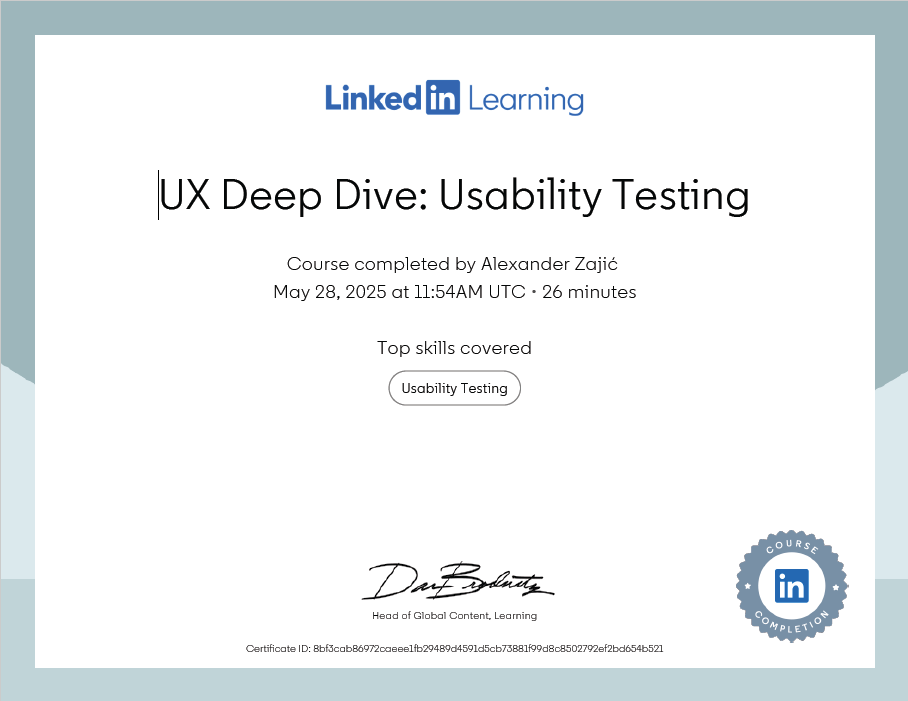
LinkedIn - Learning
Google UX & W3cx

Tools I use
The Process
Corporate Design
01 onboarding - Discovery
01 Company research
02 Market analysis
03 Competitive audit and industry trends
04 project scope
04 Design strategy
- Core Brand Identity:
- Logo design (primary and secondary marks)
- Color palette
- Typography system
- Imagery & Photography Style Guide
- Graphics – motion
2. Digital Experience Design:
- User-centered website design report
- UI examples
- UX Strategy
- Web – Wireframe
3. Print:
- Business stationery
- welcome kits & guides
- Giveaways
- Promotional brochures for corporate partners
EXAMPLE PRESENTATION
2 revision rounds
02 Development - Performance
01 Team Brainstorm
02 Developing Concepts
STRATEGY
01 CORE BRAND IDENTITY
- Logo design
- Color palette
- Typography system
- Imagery & Photography Style Guide
02 DIGITAL EXPERIENCE DESIGN
- Developing Website graphics
- Backend strategy
- Website UI
- S.E.O. Setup
03 PRINT
- Business stationery + 1st printout
- Welcome kits & guides + 1st printout
- Giveaways + 1st printout
2 revision rounds
03 Delivery - Implementation
01 Delivery and implementation of the finalized elements (Deliverables)
02 Train & Support
STRATEGY
01 CORPORATE DESIGN
- Delivering the Logo design print, and digital-ready
- Delivering graphic elements in a file or Design system
- Delivering Office templates
02 WEBSITE
- Testing the final website
- Analytics implementation
- Delivering the Website documentation
- SEO recommendation – Accessibility
03 User Experience
- Design system implementation
- UX Research
- Feedback !!!
04 Train & Support
User Experiance
01 Empathize
During the empathize phase, the primary goal is to learn more about the user, their problems, wants, and needs, as well as the environment or context in which they’ll experience the design. The most important part of the empathize phase is to step away from assumptions and guesses and let research findings inform decision-making in later design phases.
User research might include user surveys, interviews, and observation sessions, and might also include research on the competitors’ products to determine how your user frames competitors’ products as part of their daily life and daily problem-solving.
01 Research
02 Primary
03 Secondary
04 Data collection
05 Empathy maps
06 Personas
07 User story
08 User journey
02 Define
In the define phase, we analyze the research findings from the empathize phase and determine which user problems are the most important ones to solve, and why. This will help focus on a clear goal for the product’s design.
The most important outcome of this phase is a clear problem statement, which is a description of the user’s need that designs will address. We might also develop a value proposition, which is a summary of why the user would or should use the product or service that we are designing.
01 Defining user pain points
02 Problem statement
03 Hypothesis statement
03 Ideate
After we land on a user problem and establish why it’s an important one to solve, it’s time for the ideate phase. The goal of ideation is to come up with as many design solutions as possible— we don’t settle for the first solution because the most obvious solution is not always the right one.
Ideation involves collaborative brainstorming with other members of your team to generate as many solutions as possible to a problem. This could include marketing, engineering, product management, or any other stakeholders for the product or service. During brainstorming sessions, we will explore all possible solutions. we won’t focus on whether something is a “good” or “bad” idea; we will collect as many ideas as we can. The important thing here is to keep this process judgment-free.
After brainstorming, we will analyze the potential solutions and start to make choices about which ones are the best options to pursue as prototypes. We might return to user or competitive research to help narrow down the ideas, and we might also create user flows to illustrate how the user will interact with the solution.
01 Product goal statement
02 Competitive audit + report
03 Team Brainstorm
04 Ideate
04 Prototype
After we have an idea of how to solve the problem, we are ready to enter the prototype phase, where the goal is to produce an early model of a product that demonstrates its functionality and can be used for testing.
05 Test
The test phase is critical to developing the right solution to address the user’s problem, and an organized approach to testing can help us create exceptional user experiences.
Prototyping and testing are interconnected, which means that we will test the designs at each stage of prototype development rather than waiting to test until after the working prototype is complete. If the design is too polished the first time we present it to users.
Shape the User Experience
Rate my portfolio website and help me tame the Kraken!